言語 : 日本語

日本語

 Automatic Battery Pack Assembly Line For ESS

What Is an EV Battery Made Of?

May 22 , 2026


What Is an EV Battery Made Of?


Power batteries serve as the energy source for new energy vehicles (EVs). A power battery system is generally divided into three levels: the battery pack, modules, and cells.


1. Battery Pack

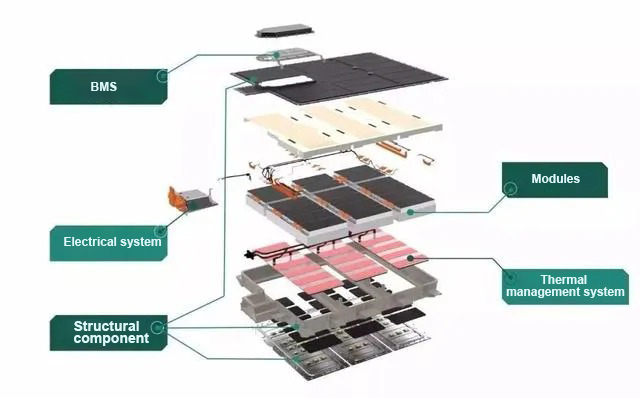
The battery pack is typically composed of battery modules, a thermal management system, a Battery Management System (BMS), electrical systems, and structural components.

Composition of battery pack
2. Module

A battery module can be understood as an intermediate product between cells and the pack, formed by combining lithium-ion cells in series and parallel configurations and adding individual cell monitoring and management devices. Its structure must support, fix, and protect the cells.

Its basic components include:

  • Module Controller: Often referred to as the BMS slave board.
  • Battery Cells
  • Conductive Connectors
  • Plastic Frame
  • Cold Plate & Cooling Pipes
  • End Plates & Fasteners: The end plates at both ends gather the individual cells together and provide a certain amount of pressure. They are also frequently designed to secure the module into the battery pack.


The purpose of module design is to facilitate cell management by the BMS, improve battery safety, and ease maintenance and repair—much like dividing a country into several provinces for easier governance.


3. Cell
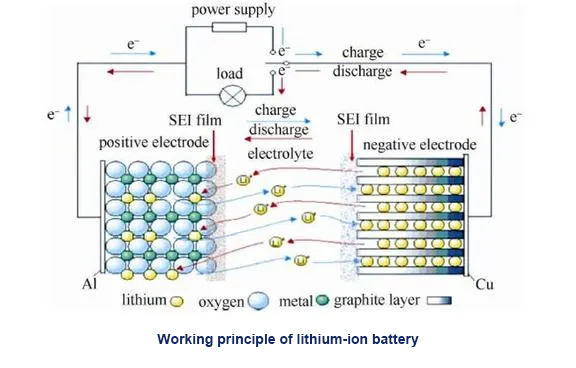
A cell consists mainly of a positive electrode (cathode), negative electrode (anode), separator, and electrolyte. Its primary working principle relies on the migration of lithium ions between the positive and negative electrodes to achieve charging and discharging.

  • Charging Process: Requires external energy (grid electricity) to store electrical energy in the battery.
  • Discharging Process: Occurs spontaneously, releasing the stored energy.
Working principle of lithium-ion battery
Comparison of Battery Material Systems

Lithium-ion EV batteries are mainly classified into three categories based on their material systems: lithium manganese oxide (LMO), ternary materials (NCM/NCA), and lithium iron phosphate (LFP).


Battery Material Material Price (per ton) Cycle Life Storage Performance (Monthly Degradation)
Lithium Manganese Oxide (LMO) 50,000 – 60,000 RMB ≥ 300 times Worst (>5% degradation)
Ternary Lithium (NCM/NCA) 160,000 – 200,000 RMB ≥ 600 times Best (1% - 2% degradation)
Lithium Iron Phosphate (LFP) 150,000 – 180,000 RMB Best (≥ 1,500 times) Medium (3% degradation)


Safety, stability, and low-temperature performance are also critical indicators for the comprehensive evaluation of lithium-ion battery performance.


  • Lithium Manganese Oxide (LMO)

LMO exhibits poor high-temperature performance, cycling stability, and storage characteristics. Manganese tends to dissolve/dissociate at elevated temperatures, leading to a short battery pack lifespan and poor shelf life.


  • Ternary Material Lithium-ion Batteries (NCM/NCA)

Ternary batteries offer a balanced performance across high/low temperatures, cycling, safety, storage, and various electrical metrics. They feature high volumetric energy density, moderate material costs, and stable performance. Depending on the ratio of nickel, cobalt, and manganese, ternary cell systems include series such as NCM532 and NCM811. The 811 system has gained significant traction in recent years. A higher nickel proportion increases the energy density of the battery, but conversely renders the power battery less stable. Therefore, power battery design is a continuous balancing act—balancing practicality with safety.


  • Lithium Iron Phosphate (LFP)
LFP features excellent safety performance but suffers from low electrical conductivity, low volumetric energy density, and high raw material costs. Its low-temperature performance is poor, making it difficult to meet the demands of electric vehicles (EVs) during winter operation.


The positive electrode of a lithium battery is constructed by coating the positive active material (such as LFP or NCM) onto aluminum foil (the current collector), while the negative electrode is made by coating the negative active material (such as graphite or LTO) onto copper foil (the current collector).

Generally, batteries are named after their positive electrode materials, which is why they are commonly referred to as ternary or lithium iron phosphate batteries. However, Lithium Titanate (LTO) batteries represent an exception, as LTO is the negative electrode material, making this a unique case of a battery named after its negative electrode material.

When reviewing foreign literature, it is common to find authors referring to the positive electrode material as the Cathode and the negative electrode material as the Anode. Initially, this can be confusing, as standard electrochemistry defines the electrode where reduction occurs as the cathode, and where oxidation occurs as the anode—meaning the designation would flip as the battery switches between charging and discharging modes. Over time, it becomes clear that this definition is based on the state of the battery without external energy influence; thus, the cathode and anode of the battery are determined specifically by the reaction states during discharge.


Battery Degradation Analysis
Battery degradation can be analyzed from two primary dimensions: performance degradation and safety degradation.


1) Performance Degradation: After a certain period of use, electric vehicles experience a decline in driving range, and a drop in acceleration performance may also become noticeable. This can be analyzed primarily through capacity fade, internal resistance (IR) increase, and elevated self-discharge rates.


2) Safety Degradation: Safety degradation is relatively more difficult to detect. The battery may have already undergone physical/mechanical deformation, the probability of an internal short circuit (ISC) may have increased, or there may be a risk of electrolyte leakage.Therefore, to fully understand the battery degradation process, the next steps involve investigating what triggers capacity reduction, what factors cause the internal resistance to increase, how battery deformation occurs, and what mechanisms lead to internal short circuits.


Comparative Safety and Market Trends
In terms of safety, lithium manganese oxide (LMO) batteries perform significantly better than ternary batteries. For example, some domestic manufacturers currently use Xinzheng’s modified LMO (LMA-30) to produce 90 Ah single cells, all of which can pass the complete suite of safety tests at the 201 Institute. In contrast, for ternary materials, even 20 Ah single cells domestically may struggle to pass the nail penetration test. This disparity is fundamentally determined by the structural stability of the materials; the crystal structure of LMO is inherently more stable than that of ternary materials.

Furthermore, LMO materials have undergone a longer development period and possess a much higher level of technological maturity. The aforementioned LMA-30 utilizes aluminum (Al) doping/modification to enhance the LMO; similar modified ternary options cannot be ruled out for future release. Additionally, due to electrolyte compatibility issues, ternary materials are more prone to gas generation (gassing) compared to LMO, which is another reason why ternary battery safety falls short of LMO.

However, the energy density of ternary materials is substantially higher than that of LMO. Consequently, the most mature power battery products currently coming out of Japan and South Korea primarily utilize LMO blended with a certain proportion of ternary materials. This approach ensures safety while simultaneously boosting energy density, representing a key trend for the future development of EV power batteries.


Cell Structures

Cells are classified into three types based on their structural design: Cylindrical, Pouch, and Prismatic.

  1. Prismatic Cells: Due to manufacturing convenience and space efficiency, prismatic cells are currently the mainstream choice for EVs in China.
  2. Cylindrical Cells: Highly standardized. Common models include 14650, 14500, 18650, and 21700. The first two digits represent the diameter (mm), the 3rd and 4th digits represent the height (mm), and "0" signifies a cylindrical shape. Tesla currently utilizes 18650 and 21700 cells, with the larger 4680 cells entering mass application. Typical components include the positive/negative plates, separator, electrolyte, casing, cap (positive terminal), gasket, and safety valve.
  3. Pouch Cells: Packaged in aluminum-plastic film, offering high design flexibility.


4. Battery Management System (BMS)
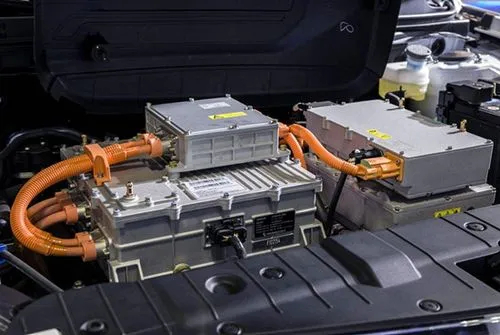
Battery management system for lithium ion battery is a control and monitoring system designed to manage battery performance and safety. By acquiring and calculating critical parameters such as voltage, current, temperature, and State of Charge (SOC), the BMS regulates the charging and discharging processes, protects the battery from abnormal operating conditions, and subsequently enhances overall battery performance and cycle life. It serves as a vital communication and control link between the onboard traction battery and the electric vehicle.

Three Primary Functions of BMS:

  1. State of Charge (SOC) Estimation: Measures the remaining power to provide drivers with accurate range metrics and charging reminders.
  2. Thermal Management: Monitors working temperatures and activates cooling systems (fans or cooling plates) to keep the battery in its optimal temperature window.
  3. Battery Balancing: Corrects voltage and capacity variances caused by manufacturing tolerances or uneven heat dissipation, preventing individual cells from overcharging.

Safety Design Target:

Hazard analysis during BMS development identifies risks like overvoltage (overcharging), undervoltage, overtemperature, and overcurrent. Long-term overcharging is particularly severe, causing irreversible damage, deformation, or leakage. The safety mechanism must detect overcharging immediately and mitigate single-point or latent failures.


5. Battery Development Trends

5.1 Cobalt-Free Batteries
Ternary lithium batteries require cobalt to stabilize their layered structure and improve cycle life. However, cobalt prices fluctuate wildly, and over half of the global supply is concentrated in the Democratic Republic of Congo (DRC), making the supply chain highly vulnerable to geopolitical and pandemic-related disruptions. Eliminating or reducing cobalt lowers vehicle costs and mitigates supply chain risks.


Cobalt-free battery

5.2 Solid-State Batteries
Solid-state batteries replace the liquid electrolyte of conventional lithium-ion batteries with a solid-state electrolyte (such as glass compounds made of lithium or sodium).
  • Advantages: Solid electrolytes feature a wide electrochemical stability window, enabling the use of high-voltage cathode materials and high-capacity lithium metal anodes, vastly increasing energy density. Their high mechanical strength also effectively blocks lithium dendrite penetration, preventing short circuits.
  • Current Challenge: Extremely high solid-to-solid interfacial impedance between the electrodes and the electrolyte.


5.3 Blade Batteries
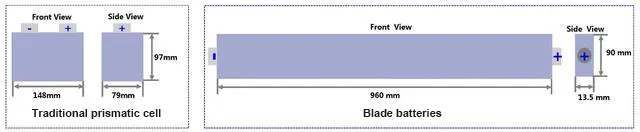
Introduced by BYD, the Blade Battery utilizes long, thin cells (960mm long, 13.5mm thick, 90mm high) that resemble blades, utilizing a stacking method internally rather than traditional winding. By utilizing structural adhesives to fix the cells between two layers of aluminum plates, the cells themselves act as structural members. This design mimics honeycomb aluminum panels, eliminating modules entirely to reduce weight, lower costs, and maximize space utilization.


5.4 Stacking Process
The stacking process involves cutting the positive electrodes, negative electrodes, and separators into small pieces and stacking them together (often in a "Z" shape) to form a large cell.
  • Challenge: The process is intricate. High rejection rates during slitting, difficulties in maintaining edge/burr consistency, and alignment precision requirements create demanding manufacturing hurdles. This is the main reason why stacked batteries have not yet achieved universal market dominance over traditional wound batteries.

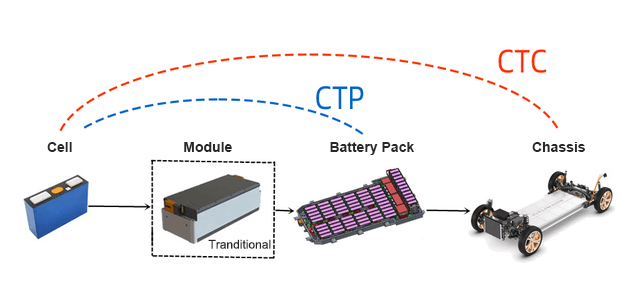
5.5 CTP / CTC
CTP (Cell to Pack): Eliminates the module layer entirely, integrating cells directly into the battery pack. This removes side plates, end plates, and internal structural beams, simplifying the architecture, reducing weight, and increasing volumetric energy density.
  • Route 1: Completely module-free (e.g., BYD Blade Battery).
  • Route 2: Integrating small modules into giant modules (e.g., CATL CTP).

CTP / CTC


CTC (Cell to Chassis): The next evolution beyond CTP. It integrates the battery cells directly into the vehicle chassis, blending the battery cover with the vehicle floor. Seats can be mounted directly onto the battery pack. CTC bypasses traditional PACK boundaries, enabling deep integration of the cells, chassis, motor, electronic control, and DC/DC systems to optimize space, reduce energy consumption, and bring EV production costs in direct competition with internal combustion engine vehicles.


Acey New Energy delivers turnkey manufacturing equipment and one-stop engineering solutions for lithium-ion battery pack assembly lines, covering the entire process from cell to pack.

We support clients from initial factory planning to final production, providing comprehensive services that include line layout optimization, equipment integration, module stacking, precision laser welding, BMS integration, and final pack performance testing.

Our systems prioritize structural practicality, operational stability, and ease of maintenance. Utilizing standardized equipment with flexible, modular configurations, we enable manufacturers to minimize setup lead times, mitigate production risks, and significantly improve cell-to-pack consistency.

ACEY welcomes global partners and looks forward to establishing reliable, long-term cooperation on battery pack manufacturing projects.

伝言を残す
伝言を残す
もし 当社の製品に興味があり、詳細を知りたい場合は、ここにメッセージを残してください。 できる限りすぐに返信します。

ホーム

製品

連絡先

whatsApp