言語 : 日本語

日本語

 Automatic Battery Pack Assembly Line For ESS

Battery Pack Comprehensive Testing Equipment: Functions and Selection Guide

August 04 , 2026
Battery Pack Comprehensive Testing Equipment: Functions, Test Items and Selection Guide

After a battery pack has been assembled, its electrical performance and protection functions need to be tested to determine whether the product meets its specified parameters and production requirements.

A normal open-circuit voltage alone does not prove that a battery pack is operating correctly. The pack may still have excessive internal resistance, unstable charge or discharge performance, incorrect overcurrent protection values or an excessively slow short-circuit response.

Battery pack comprehensive testing equipment combines multiple electrical and protection-function tests in one system. It can be used for testing semi-finished and finished battery packs during production.

By running a predefined test program, the equipment can measure battery voltage, AC internal resistance, continuous charge and discharge performance, overcurrent protection, short-circuit protection time and other relevant parameters.

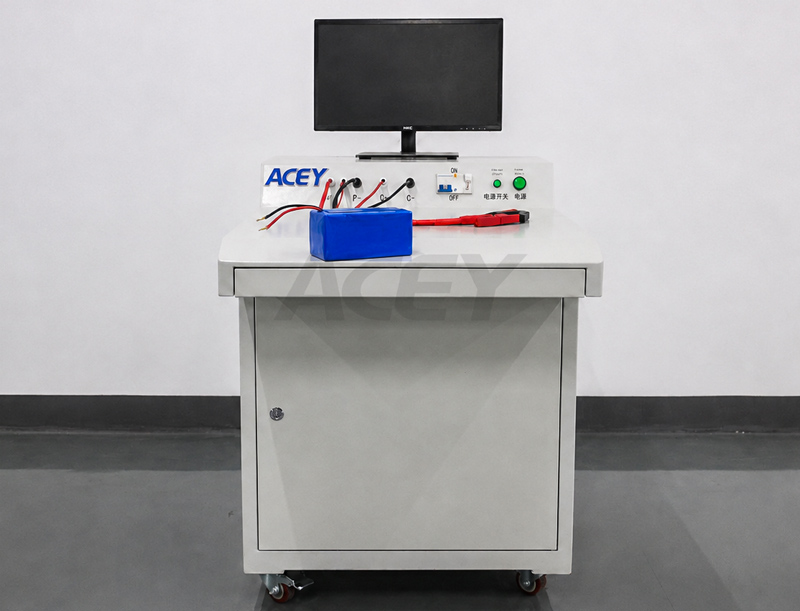
Battery Comprehensive Testing Machine


What Is Battery Pack Comprehensive Testing Equipment?


Battery pack comprehensive testing equipment is a system used to evaluate the electrical performance and protection functions of rechargeable battery packs.

Unlike a single-function voltage or internal resistance tester, a comprehensive testing system can combine multiple test items into one program and execute them in a predefined sequence.

The standard test items available on ACEY-BIT series battery comprehensive testing machine mainly include:

  • Battery open-circuit voltage
  • Post-test voltage
  • 1000 Hz AC internal resistance
  • Continuous charging current
  • Continuous charging voltage monitoring
  • Charging overcurrent protection current
  • Charging overcurrent protection delay
  • Continuous discharging current
  • Continuous discharging voltage monitoring
  • Discharging overcurrent protection current
  • Discharging overcurrent protection delay
  • Short-circuit protection time
  • Charging voltage rise
  • Discharging voltage drop
  • Charging DC internal resistance
  • Discharging DC internal resistance
  • Identification resistance and NTC resistance
  • Secondary discharging overcurrent protection current
  • Secondary discharging overcurrent protection time

Depending on the battery pack structure and project requirements, the following functions can be added as optional configurations:

  • Individual cell voltage monitoring
  • RS485, RS232 or CAN communication testing
  • Insulation and withstand voltage testing

The final test configuration should be confirmed according to the battery pack voltage, current, terminal structure, protection-board functions and required inspection standards.

Why Is Comprehensive Battery Pack Testing Necessary?

A battery pack contains cells, conductive connections, a protection circuit board, external terminals, temperature-sensing components and other electrical parts.

Even when the open-circuit voltage is within the specified range, the charge, discharge and protection functions may not operate correctly.

Possible problems include:

  • The battery cannot continuously deliver the specified discharge current.
  • The protection board does not interrupt the circuit when the charging current becomes excessive.
  • The discharging overcurrent protection value does not match the product specification.
  • The protection response is too slow during a short circuit.
  • Battery pack internal resistance exceeds the specified limit.
  • Identification resistance or NTC resistance is abnormal.

Comprehensive testing provides a more complete evaluation of the battery pack and generates test data for production quality control, abnormal-product analysis and traceability.

Main Functions of Battery Pack Comprehensive Testing Equipment


1. Voltage Testing

ACEY-BIT series battery pack comprehensive testing machine can measure the battery pack voltage twice during one comprehensive test.

The first measurement records the no-load voltage before the main test procedures begin. The second measurement is performed after the other test items have been completed, especially after the short-circuit protection test.

Comparing the two voltage values helps determine whether the battery pack remains in a normal condition after charge, discharge and protection-function testing.

Because some energy is consumed during the test, the post-test voltage may be slightly lower than the initial no-load voltage.

2. 1000 Hz AC Internal Resistance Testing

Internal resistance is an important parameter for evaluating the electrical performance of a battery pack.

ACEY-BIT series battery comprehensive tester measures battery AC internal resistance at 1000 Hz.

If the measured internal resistance is higher than the specified limit, the cells, conductive connections, welding quality and internal wiring may need further inspection.

3. Continuous Charging Current Testing

Continuous charging current testing determines whether the battery pack can maintain normal charging under the specified current.

For a battery protection board without automatic charging overcurrent protection, the continuous charging current can be configured according to the output current of the charger.

The tester applies the configured charging current and checks whether the battery pack can continue charging normally.

4. Continuous Charging Voltage Monitoring

Upper and lower battery voltage limits can be configured during continuous charging.

The system monitors the battery pack voltage and determines whether it remains within the specified range.

This test helps identify excessive, insufficient or abnormal voltage changes during continuous charging.

5. Charging Overcurrent Protection Current Testing

Charging overcurrent protection testing determines whether the battery protection board can automatically interrupt the circuit when the charging current exceeds the configured value.

If the charging current becomes excessive and the protection board does not respond, the protection circuit inside the battery pack may be damaged.

The tester applies charging current under predefined conditions and records the current at which the protection board activates.

For battery packs without charging overcurrent protection, continuous charging current testing can be selected instead.

6. Charging Overcurrent Protection Delay Testing

Charging overcurrent protection delay is the time between the start of the configured overcurrent condition and the activation of the battery protection board.

Measuring this delay helps determine whether the response time meets the battery pack specification.

7. Continuous Discharging Current Testing

Continuous discharging current testing simulates the normal operating discharge condition of the battery pack.

The tester applies the configured discharge current and checks whether the battery pack can continuously deliver the required output.

A faulty protection board, electrical connection or battery pack may cause unstable discharge or premature interruption.

8. Continuous Discharging Voltage Monitoring

Upper and lower voltage limits can be configured during continuous discharging.

The system monitors battery pack voltage throughout the discharge process and determines whether the voltage exceeds the specified range.

9. Discharging Overcurrent Protection Current Testing

Discharging overcurrent protection testing checks whether the protection board interrupts the circuit when the discharge current exceeds a predefined value.

The current is normally configured according to the battery pack or protection-board specification.

The tester records the actual current at which the protection function is activated.

10. Discharging Overcurrent Protection Delay Testing

Discharging overcurrent protection delay is the time between the start of the overcurrent condition and the protection-board response.

This parameter is used to evaluate how quickly the protection board responds to excessive discharge current.

11. Secondary Discharging Overcurrent Protection Testing

For battery packs with two levels of discharging overcurrent protection, ACEY-BIT series battery pack comprehensive tester can also test:

  • Secondary discharging overcurrent protection current
  • Secondary discharging overcurrent protection time

The test current and delay parameters should be configured according to the battery pack or protection-board specification.

12. Short-Circuit Protection Time Testing

Short-circuit protection testing measures how quickly the protection board interrupts the circuit when the positive and negative terminals are instantaneously shorted.

A short circuit may produce a very high current. If the protection response is too slow, the protection circuit or other battery pack components may be damaged.

If the measured protection time is too long, the test-circuit resistance, wiring connections and protection-board response should be checked.

13. Charging Voltage Rise Testing

Charging voltage rise is the difference between the voltage after charging and the static voltage before charging.

Comparing these two values helps evaluate the battery pack voltage change under the configured charging condition.

14. Discharging Voltage Drop Testing

Discharging voltage drop is the difference between the voltage before discharge and the voltage after discharge.

This parameter reflects the battery pack voltage reduction under the configured load.

15. Charging DC Internal Resistance Testing

The battery pack produces a voltage rise after charging.

Charging DC internal resistance can be calculated using the voltage rise and the configured charging current, providing a reference for battery resistance during charging.

16. Discharging DC Internal Resistance Testing

The battery pack produces a voltage drop after discharging.

Discharging DC internal resistance can be calculated using the voltage drop and the configured discharge current.

17. Identification Resistance and NTC Testing

The tester can measure battery pack identification resistance and NTC resistance.

This function helps verify whether the identification circuit and temperature-sensing circuit are within the configured resistance ranges.

Optional Test Functions of ACEY-BIT Series Battery Comprehensive Testing Machine

The following functions are optional. They are not included as standard functions on every ACEY-BIT battery comprehensive tester.

Whether these options are required should be determined according to the battery pack structure, inspection standard and project requirements.

1. Individual Cell Voltage Monitoring

Individual cell voltage monitoring is an optional function.

It dynamically monitors the voltage of individual cell groups during battery pack charging and discharging.

For a multi-series battery pack, this function can help identify voltage differences or abnormal changes between individual cells.

2. Communication Testing

Communication testing is an optional function.

Depending on the project requirements, ACEY-BIT series can be configured to support:

  • RS485
  • RS232
  • CAN

This function is mainly used to check communication between the battery pack, BMS and external control equipment.

Communication testing is not a standard function on every machine. The communication interface, protocol and required test content should be confirmed before the equipment is configured.

3. Insulation and Withstand Voltage Testing

Insulation and withstand voltage testing is an optional function.

It is used to evaluate the electrical insulation performance of a battery pack and is suitable for battery products with specific insulation or withstand voltage inspection requirements.

The test voltage, test conditions and acceptance criteria should be configured according to the battery pack specification and project requirements.

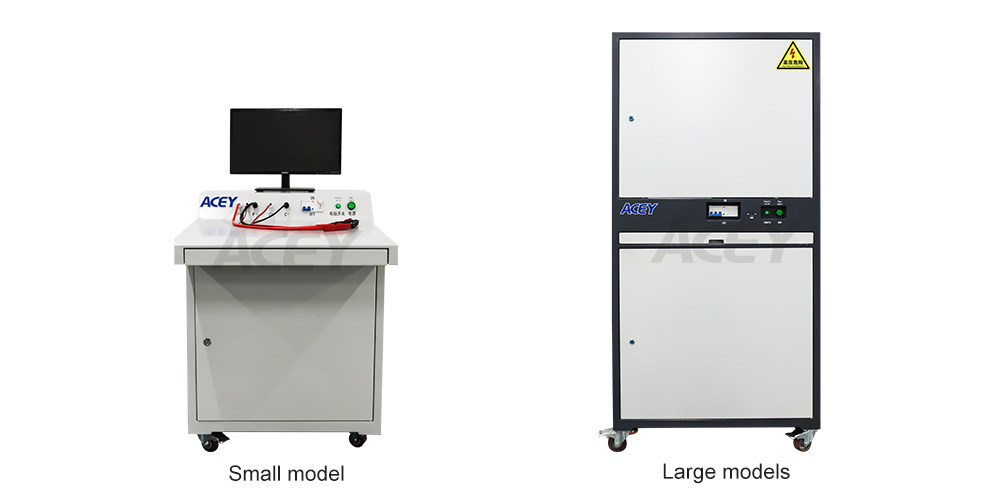
ACEY-BIT Series Battery Comprehensive Tester


ACEY-BIT series battery pack comprehensive tester is designed for comprehensive performance testing of energy storage modules, electric vehicle batteries, electric scooter batteries, AGV batteries, garden tool batteries and other power battery packs.


It can be used to test semi-finished and finished battery packs during production.

For lithium-ion battery packs with CH+, P+, CH− and P− terminals, the tester can be connected according to the actual terminal structure.

Main Testing Range
  • Battery pack voltage range: 10–300 V
  • Testing current range: 60–600 A
  • Special test requirements: Customized configurations are available

The equipment can also be used as an electronic load for long-duration current loading tests on battery packs.


Battery Pack Comprehensive Testing Equipment


Flexible Testing Modes


*Step-by-Step Testing Mode


In step-by-step testing mode, the sequence of individual test functions can be adjusted.

A suitable testing process can be configured according to the battery pack model, protection-board parameters, terminal structure and inspection requirements.

*Fast Testing Mode

Fast testing mode supports test-program editing and selection.

For battery pack models that are repeatedly tested on a production line, a saved test program can be selected without re-entering all parameters.

Multiple Test Start Methods

ACEY-BIT series supports:

  • Manual start
  • Automatic start
  • Barcode-scanning start

Barcode-based testing can associate the product barcode with the selected test program and test results, supporting production traceability.

Multiple Battery Model Program Management

Different battery pack models may have different voltage, current, protection and acceptance parameters.

The system of ACEY-BIT series battery comprehensive testing machine can save multiple battery model test programs. When the product model changes, the corresponding program can be selected.

A test program may include:

  • Test items
  • Test sequence
  • Upper and lower voltage limits
  • Continuous charge and discharge currents
  • Charge and discharge overcurrent protection parameters
  • Protection delay times
  • Short-circuit protection time
  • Pass/fail conditions
  • Test Data Storage

Test data can be saved according to production and quality-management requirements.

Available storage methods may include:

  • Storage by date or month
  • Batch data storage
  • Individual product data storage
  • Storage according to the test program
  • User-defined storage locations

The stored data can support production traceability, batch analysis and abnormal-product investigation.

MES System Connection

ACEY-BIT series battery integrated testing machine supports connection with a manufacturing execution system.

Through MES integration, the battery model, barcode, test parameters and test results can be associated with production records.

The MES interface and communication method should be confirmed according to the production system and project requirements.

MES connection should not be confused with the optional battery pack communication test.

MES connection is used for data exchange between the testing equipment and the production-management system. Optional communication testing is used to evaluate RS485, RS232 or CAN communication functions of the battery pack or BMS.

Applications of Battery Pack Comprehensive Testing Equipment


Energy Storage Battery Modules

Comprehensive testing equipment can be used to test the voltage, internal resistance, charge, discharge and protection performance of assembled energy storage battery modules.

When battery communication or insulation inspection is required, the corresponding optional functions can be added.

Electric Vehicle Battery Packs

Electric vehicle battery packs need stable charge and discharge performance and effective overcurrent and short-circuit protection.

A comprehensive tester can evaluate the pack according to predefined voltage, current and protection parameters.

Electric Scooter and E-Bike Batteries

Electric scooter and e-bike batteries need to maintain stable discharge during operation.

Continuous discharge, internal resistance, overcurrent protection and short-circuit protection tests can identify unstable output or abnormal protection functions.

AGV Battery Packs

AGV battery packs are commonly used in factories and warehouse logistics equipment.

A comprehensive tester can evaluate their electrical performance. When BMS communication testing is required, RS485, RS232 or CAN testing can be added as an optional configuration.

Garden Tool and Power Tool Batteries

Garden tools and power tools may require relatively high discharge current during operation.

Continuous discharge and discharging overcurrent protection testing can determine whether the battery pack meets the required load conditions.

Battery Development and Product Verification

Comprehensive testing equipment can also be used for battery pack development, protection-board verification and new product testing.

Different battery pack structures and protection configurations can be evaluated by adjusting the test items, sequence and acceptance parameters.

How to Select Battery Pack Comprehensive Testing Equipment


1. Confirm the Battery Pack Voltage Range


The tester voltage range should cover the minimum and maximum voltage of the battery packs being tested.

ACEY-BIT series supports battery packs from 10 V to 300 V.

2. Confirm the Required Testing Current

The testing current should cover the normal charge and discharge current as well as the overcurrent protection parameters.

ACEY-BIT series supports testing currents from 60 A to 600 A, with customized configurations available.

3. Confirm the Battery Terminal Structure

Confirm whether the battery pack uses common or separate charge and discharge ports and whether it includes CH+, P+, CH− and P− terminals.

The tester connection should match the battery pack terminal definition.

4. Confirm the Standard Test Items

The required voltage, internal resistance, continuous charge and discharge, overcurrent protection, short-circuit protection, identification resistance and NTC tests should be confirmed before equipment selection.

5. Confirm the Optional Functions

Depending on the project, confirm whether the tester requires:

  • Individual cell voltage monitoring
  • RS485, RS232 or CAN communication testing
  • Insulation and withstand voltage testing

These are optional functions and should be confirmed separately before the machine configuration is finalized.

6. Confirm the Data Management Requirements

For production traceability, determine whether the project requires:

  • Barcode scanning
  • Individual product data storage
  • Batch data management
  • Multiple battery model programs
  • MES system connection


7. Confirm Product Changeover Requirements


For manufacturers producing multiple battery pack models, the tester should support multiple saved test programs and efficient model changeover.

Development Trends in Battery Testing Equipment

As electric vehicles, energy storage systems and other new-energy applications continue to develop, battery testing equipment is becoming more automated, intelligent and data-driven.

Test-program management, automatic result evaluation, barcode traceability and MES connection can help manufacturers improve testing efficiency and production data management.

Testing systems are also becoming more configurable, allowing voltage, current, terminal structure, test items and optional functions to be adapted to different battery pack projects.


FAQ

*1. What test items can the battery pack comprehensive tester perform?
The standard test items of ACEY-BIT series battery comprehensive testing machines mainly include open-circuit voltage, post-test voltage, 1000 Hz AC internal resistance, continuous charging and discharging, overcurrent protection, protection delay, short-circuit protection time, identification resistance and NTC resistance.
The final test program should be configured according to the battery pack specification, protection-board functions and production inspection requirements.

*2. What battery pack voltage and current ranges does ACEY-BIT series battery comprehensive tester support?
ACEY-BIT series battery comprehensive tester supports battery pack voltages from 10 V to 300 V and testing currents from 60 A to 600 A.
Customized configurations are available when the standard range does not meet the battery pack voltage, current or test requirements.

*3. Is communication testing included as a standard function?
No. Communication testing is an optional function.
Depending on the project requirements, the tester can be configured for RS485, RS232 or CAN communication testing. The required interface, protocol and test content should be confirmed before the equipment is configured.

*4. Is insulation and withstand voltage testing a standard function?
No. Insulation and withstand voltage testing is optional.
It is suitable for battery packs with specific electrical insulation and withstand voltage inspection requirements. The test voltage, test conditions and acceptance criteria should be confirmed according to the product specification.

*5. Can the tester monitor individual cell voltages?
Individual cell voltage monitoring can be added as an optional function.
It dynamically monitors the voltage of individual cell groups during charging and discharging, helping identify voltage differences or abnormal cell behavior. It is not included as a standard function on every tester.

*6. Can the system test charging and discharging overcurrent protection?
Yes.
The equipment can test charging overcurrent protection current, charging protection delay, discharging overcurrent protection current and discharging protection delay.
For battery packs with secondary discharging overcurrent protection, the corresponding secondary protection current and response-time tests can also be configured.

*7. What is the purpose of short-circuit protection time testing?
Short-circuit protection time testing measures how quickly the battery protection board interrupts the circuit when the positive and negative terminals are instantaneously shorted.
It helps determine whether the protection board responds quickly enough. The test parameters and acceptance limits should be set according to the battery pack or protection-board specification.

*8. Can one tester be used for different battery pack models?
Yes.
The system can save multiple battery model test programs, including test items, test sequences, voltage limits, current parameters, protection values and pass/fail conditions.
When the product model changes, the corresponding saved program can be selected.

*9. How can a battery pack test be started?
ACEY-BIT series battery comprehensive testing machine supports manual start, automatic start and barcode-scanning start.
Barcode-based testing can associate the product barcode with the selected test program and test results, supporting production data management and traceability.

*10. Can the equipment connect to an MES system?
Yes.
ACEY-BIT series battery comprehensive test system supports MES connection for transferring battery model information, barcode data, test parameters and test results to a production-management system.
MES connection is different from optional battery pack communication testing. MES integration is used for data exchange between the tester and the manufacturing system, while communication testing evaluates the RS485, RS232 or CAN functions of the battery pack or BMS.

*11. Can the equipment be used as an electronic load?
Yes.
ACEY-BIT series can operate as an electronic load for long-duration current loading tests on battery packs. The loading current, test duration and acceptance conditions can be configured according to the battery pack specification.

*12. What battery applications are suitable for ACEY-BIT series battery comprehensive testing machine?
ACEY-BIT series comprehensive testing machine can be used for testing semi-finished and finished energy storage modules, electric vehicle batteries, electric scooter batteries, AGV batteries, garden tool batteries and other power battery packs.
The final equipment configuration should be selected according to the battery pack voltage, current, terminal structure and required test items.

伝言を残す
伝言を残す
もし 当社の製品に興味があり、詳細を知りたい場合は、ここにメッセージを残してください。 できる限りすぐに返信します。

ホーム

製品

連絡先

whatsApp