
XIAMEN ACEY NEW ENERGY TECHNOLOGY CO., LTD.

円筒形バッテリーパックの組み立て方法:工程と設備ガイド
August 28 , 2026円筒形バッテリーパックの組み立て方:手順と機器ガイド
電動工具、電動自転車、ドローン、携帯型電源、エネルギー貯蔵システムなどに使用される円筒形バッテリーパックは、電圧、容量、パック構造において大きく異なる場合があるが、ほとんどの生産ラインは同様の組み立て手順に従っている。
主な工程には、セル容量の等級付け、絶縁紙の貼付、OCVと内部抵抗の選別、セルの配置、極性検査、スポット溶接、BMSテストが含まれます。そしてインストールパックテスト、包装、コーディング、充放電エージングを完了しました。
これらの工程は、オフラインのワークステーション、半自動ライン、または完全自動生産ラインとして構成することができる。
円筒形バッテリーパックの組み立て工程
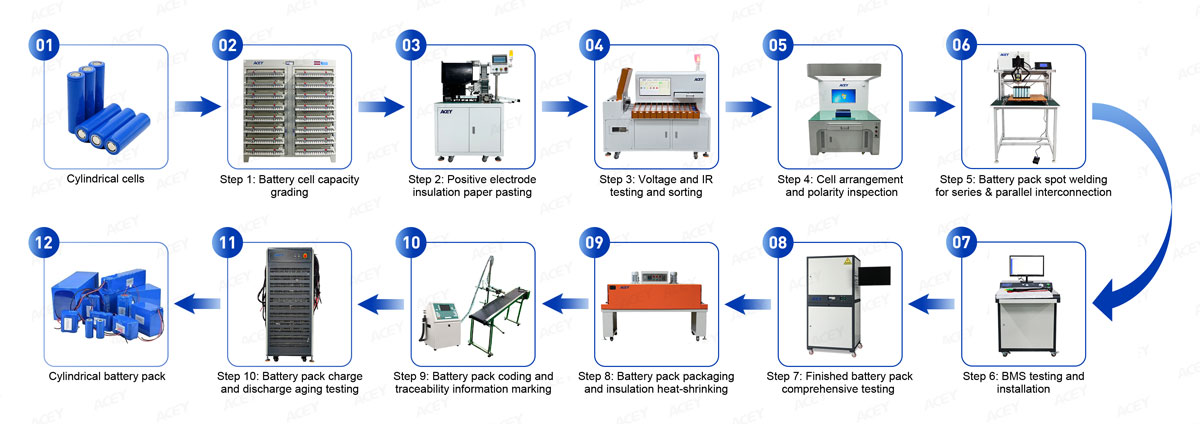
セル容量等級付け → 絶縁紙貼り付け → OCVおよびACIR選別 → セル配置 → 極性検査 → スポット溶接 → BMSテストおよび設置 → バッテリーパックテスト → パッケージングおよびコーディング → 充放電エージング
最初のいくつかの工程では、セルの均一性と正しい配置に重点が置かれます。溶接とBMS(バッテリー管理システム)の組み立てによってパックの電気的接続が確立され、出荷前に完成したパックのテストとエージングによって組み立てられたバッテリーが検証されます。
円筒形バッテリーパックの主要構成要素
円筒形バッテリーパックは主に以下の要素で構成されています。
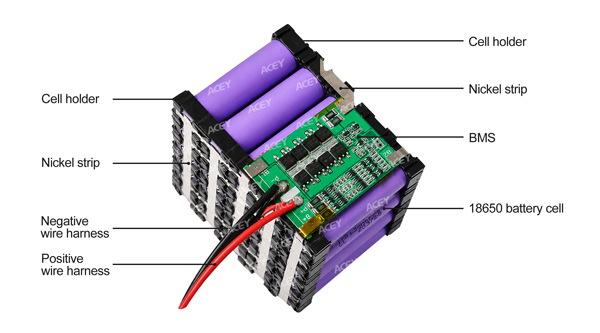
直列接続はパック電圧を決定し、並列接続は容量と電流容量を増加させる。
一般的な円筒形セルのサイズと用途
サポートされているセル形式
14500 · 18650 · 21700 · 26650 · 32650 · 32700 · 32140 · 33140
すべての機械が同じ工具を使用するわけではありません。セルの直径、高さ、またはパック構造が変更された場合、治具、セルホルダー、および供給機構を変更する必要が生じる場合があります。
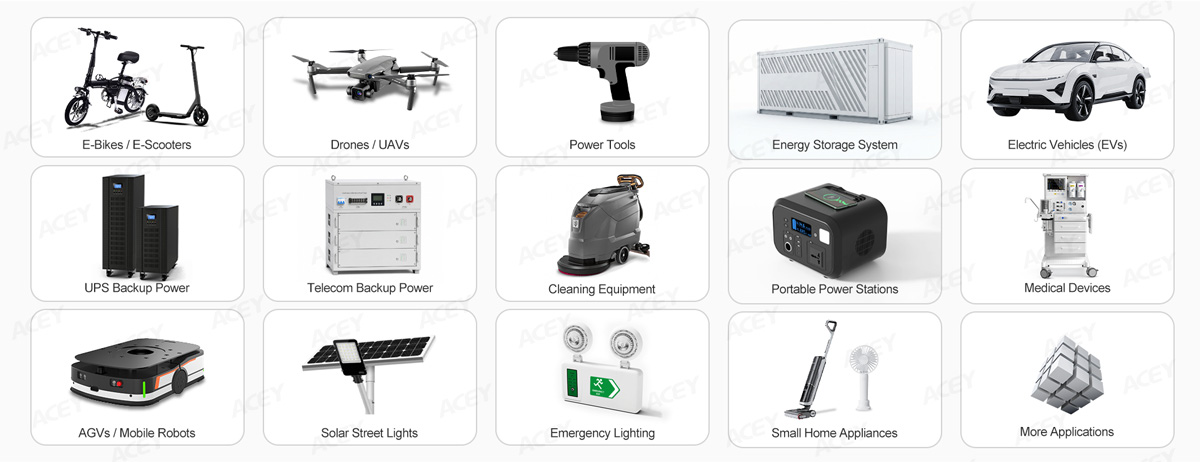
代表的な用途
円筒形バッテリーパックの組み立てにはどのような機器が使用されますか?
完全な生産設備には、以下の機器が含まれる場合があります。
| プロセス | 目的 | 装置 |
| 容量等級 | 容量に基づいて細胞を測定し、グループ分けする | バッテリーセル選別機 |
| 絶縁 | 正極端子に絶縁紙を貼る | 絶縁紙貼り付け機 |
| OCVおよびACIRの選別 | 電圧と抵抗に基づいて細胞を分類する | 電池選別機 |
| 極性検査 | チェック パックの正極と負極 | CCD極性試験機 |
| 電気接続 | 接続ストリップをセルに溶接する | バッテリーパックスポット溶接機 |
| BMS検証 | テスト保護基板の機能 | BMSテスター |
| パックテスト完了 | 組み立て済みパックの性能を確認する | バッテリー総合テスター |
| パッケージ | 熱収縮フィルムを貼る | 熱収縮機 |
| 識別 | バッチ情報と製品情報を印刷する | コーディングマシン |
| エージング | 充放電サイクルを実行する | バッテリーパック劣化試験機 |
試作品や少量生産の場合、いくつかの工程は手作業のままで行うことができます。大規模な生産ラインでは、特に選別、極性検査、溶接、試験など、品質と生産量に最も影響を与える工程を自動化します。
ステップ1 — セル容量の等級付け
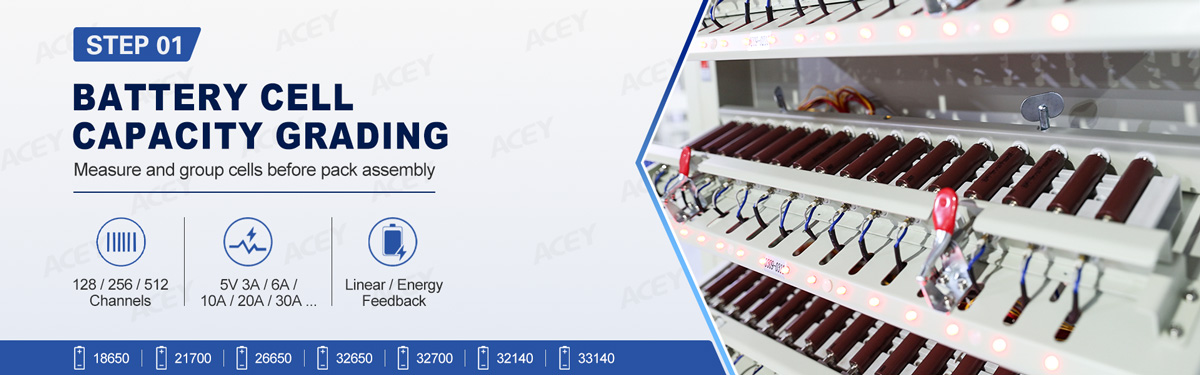
組み立て前に、セルを充電および放電して、使用可能な容量と基本的な性能を測定します。
その目的は、長期間の保管や輸送中に充電が枯渇したり容量が失われたりして、容量が大きく異なるセルが同じバッテリーパックにまとめられるのを防ぐことです。容量の弱いセルがあると、直列または並列接続されたバッテリー全体の性能が制限されてしまいます。
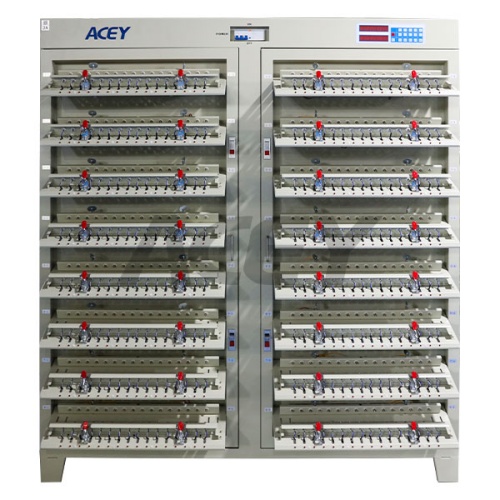
A lイチウムイオン 細胞選別機 複数のチャネルにわたってプログラムされた充放電サイクルを実行し、各セルのデータを記録する。
ACEYのグレーディングシステムは、以下のような一般的な円筒形フォーマットに合わせて構成できます。
18650 · 21700 · 26650 · 32650 · 32700 · 32140 · 33140
利用可能な構成は以下のとおりです。
大量の細胞を処理する場合、マルチチャンネルグレーディングにより、数百個の細胞をパック組立段階に入る前に同時に検査することが可能になります。
推奨機器:バッテリーセル選別機
ステップ2 - 断熱紙の貼り付け
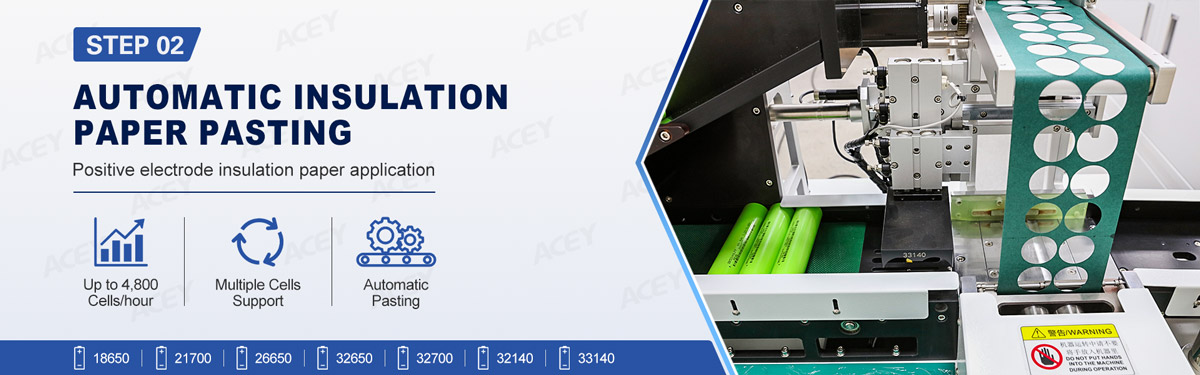
容量等級付け後、正極端子の周囲に絶縁紙を貼付する。
この追加の絶縁材は、組み立て時に正極端子部分と金属製の電池ケース(陽極)を分離するのに役立ちます。
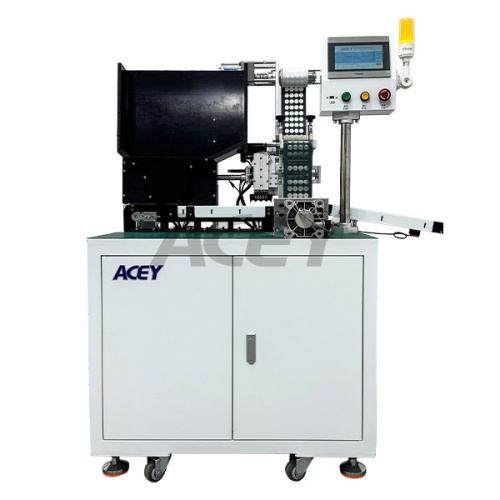
1自動絶縁紙貼付機用紙を正確な位置にカットして貼り付けます。ACEY社の機械は、さまざまな円筒形セルに対応できるよう、交換可能な工具を装備できます。
セルと機械の構成によっては、生産速度は最大で毎時4,800セルに達する可能性があります。
一般的なフォーマットは以下のとおりです。
18650 · 21700 · 26650 · 32650 · 32700
Larger cylindrical cells such as 32140 and 33140 require suitable tooling and machine configuration.
Recommended Equipment: Battery Insulation Paper Sticking Machine
Step 3 — OCV and Internal Resistance Sorting
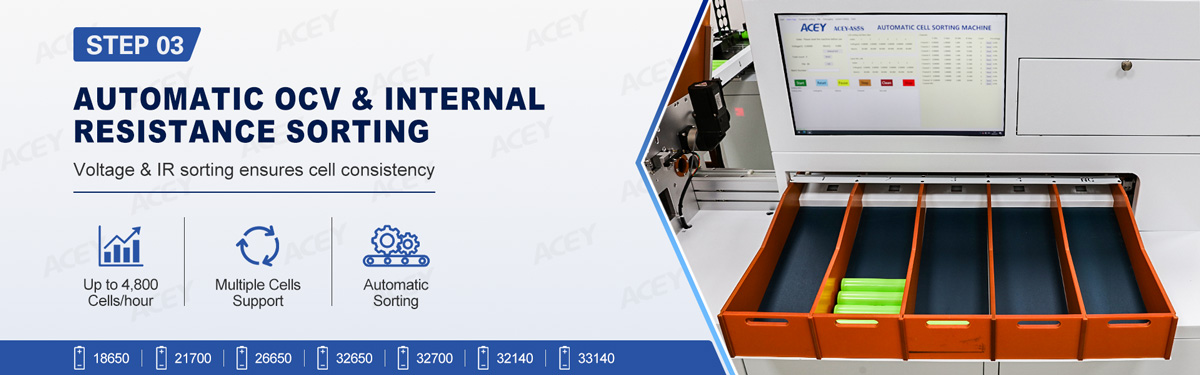
Capacity grading alone is not enough for final cell matching.
Before assembly, it is also necessary to measure theopen-circuit voltageandAC internal resistanceof the battery cells to ensure the consistency of the battery pack.
The measured values are compared with preset ranges, and the cells are automatically separated into different groups.
ACEY cylindrical battery sorting machines are available with standard 5-, 6-, 10-, or 11-channel configurations, with customized options also available. They can be integrated with branded testers such as the HIOKI BT3561 or other compatible instruments to measure open-circuit voltage (OCV) and AC internal resistance.
Barcode scanning can also be added when the production process requires cell-level traceability.
Cells with large differences in voltage or resistance may behave differently under charge and discharge. Sorting helps the manufacturer build packs from cells with closer electrical characteristics.
For production lines that combine insulation paper application and sorting, these processes can also be integrated to reduce repeated cell handling.
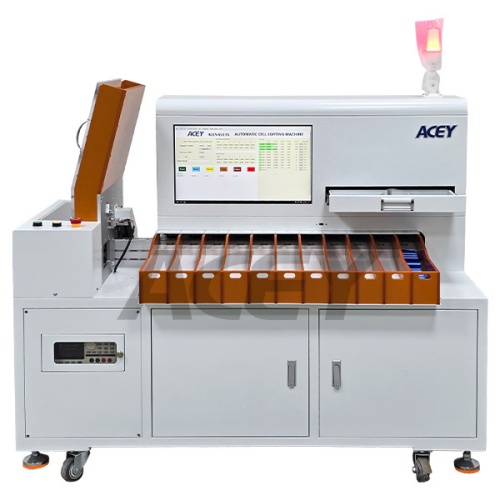
Recommended Equipment: Cylindrical Battery Sorting Machine
Step 4 — Cell Arrangement and Polarity Inspection
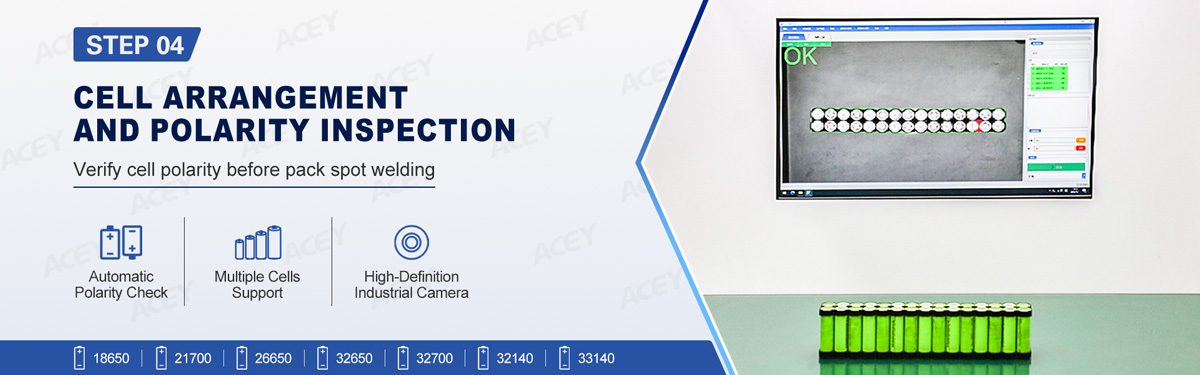
Sorted cells are placed into the required series-parallel arrangement using cell holders or dedicated fixtures.
Before welding, the positive and negative orientation of every cell should be checked.
For small production runs, this may be done manually. On semi-automatic and automatic lines, a CCD polarity inspection system is more reliable because it checks the complete cell group against the preset pattern.
ACEY CCD inspection systems can be configured for cylindrical cells including:
18650 · 21700 · 26650 · 32650 · 32700 · 32140 · 33140
Any reversed or incorrectly positioned cell can be identified before the pack enters the welding station.
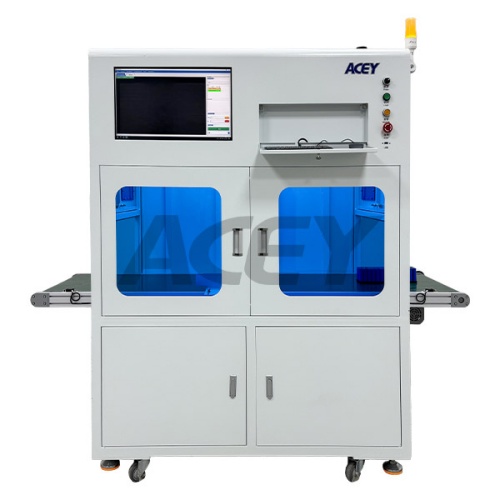
Recommended Equipment: CCD Tester
Step 5 — Battery Pack Spot Welding
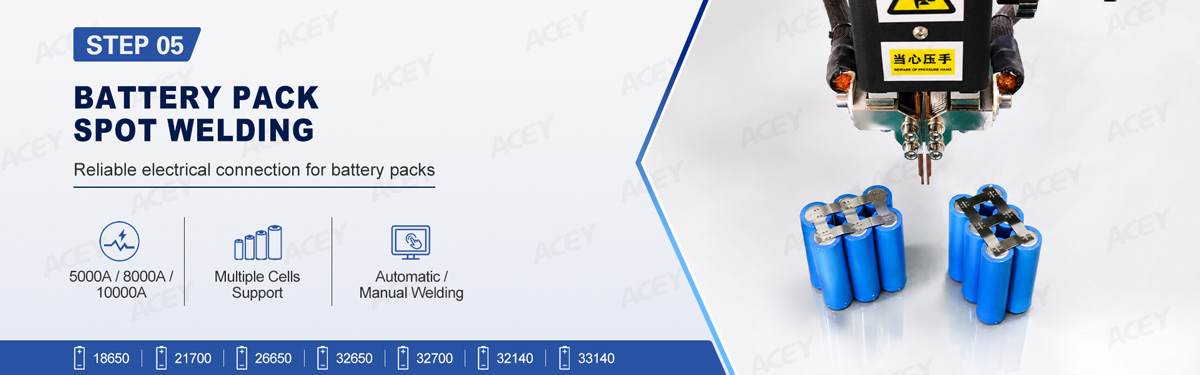
Spot welding is one of the most important operations in cylindrical battery pack assembly.
The cells are connected in series and parallel by welding nickel or nickel-plated connecting strips to the cell terminals.
The welding result is affected by more than welding current. The main process variables include:
ACEY provides 5000A, 8000A and 10000A DC inverter or transistor welding power supply configurations for cylindrical battery pack assembly.
Machine options include:
Automatic models can store welding programs for different battery pack designs and move between preset welding positions.
For production use, welding parameters should be validated with the actual cell and connecting strip. A parameter that works well on one battery pack should not automatically be copied to another design.
The inspection criteria may include weld appearance, connection strength and electrical resistance according to the manufacturer’s own process standard.
Recommended Equipment: Battery Pack Spot Welding Machine
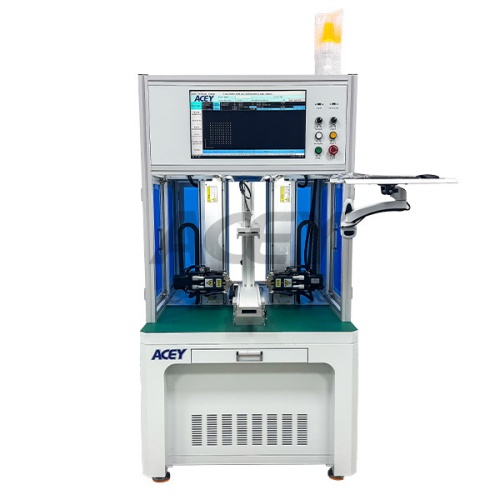
Step 6 — BMS Testing and Installation
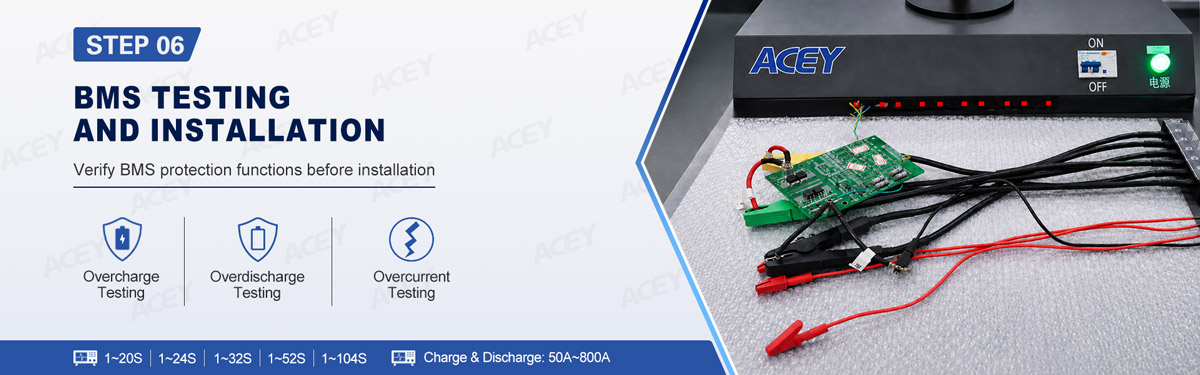
After the cell groups are electrically connected, the battery management system is installed according to the pack design.
Before installation or final integration, the BMS can be tested to verify its protection functions.
A BMS tester mainly check functions such as:
The required test range is determined by the BMS series count, voltage and current rating.
After BMS verification, assembly work includes:
This part of the process varies significantly from one battery pack to another. BMS specifications and electrical drawings are therefore important when configuring the assembly workstation or production line.
Recommended Equipment: BMS Tester
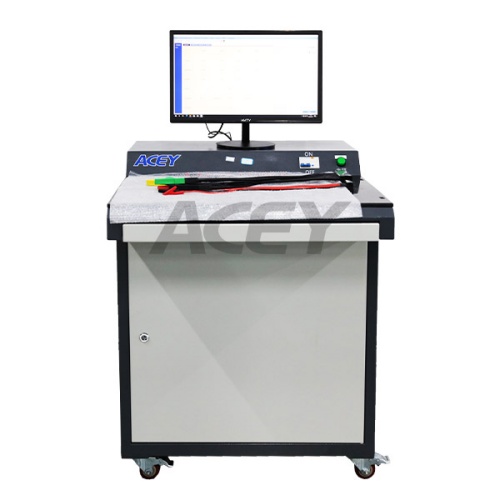
Step 7 — Finished Battery Pack Testing
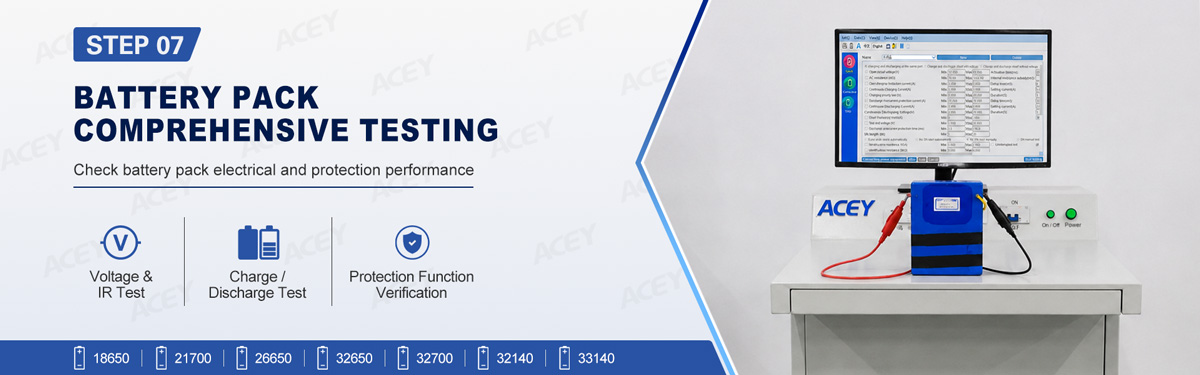
Once the BMS, wiring and electrical connections are complete, the battery pack is tested as a finished assembly.
This step checks components and connections introduced during battery pack assembly rather than the performance of an individual cell.
A battery comprehensive tester can be configured to test:
Upper and lower limits are set in the test program, allowing the equipment to identify qualified and unqualified packs.
Finished pack testing is particularly useful for detecting problems related to:
ACEY provides different voltage and current configurations for small and larger battery packs.
Recommended Equipment: Battery Comprehensive Tester
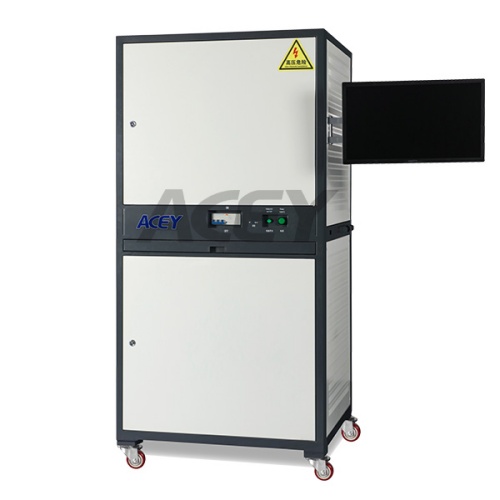
Step 8 — Battery Pack Packaging
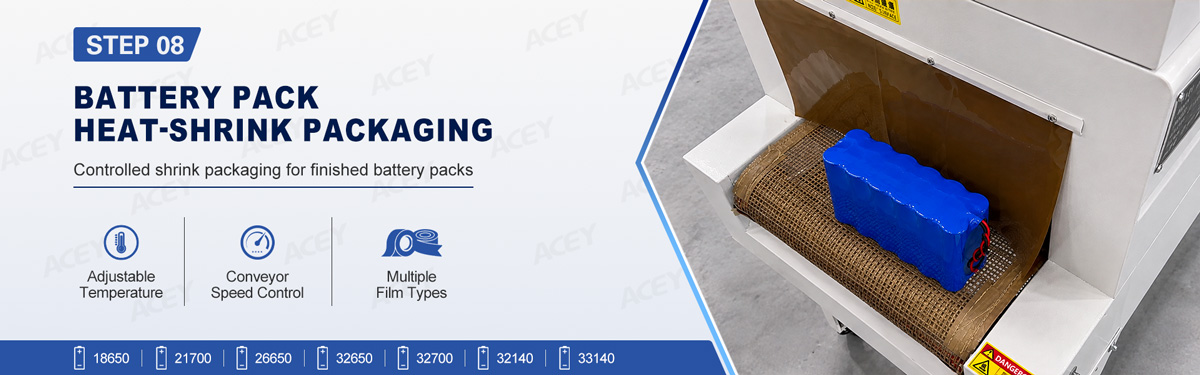
After electrical testing, the pack is prepared for final packaging.
The packaging method may include:
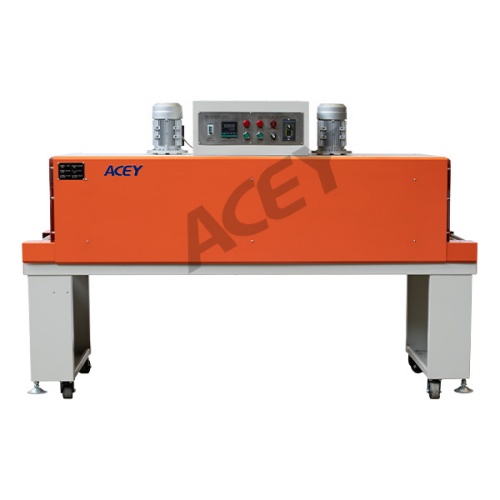
For heat-shrink packaging, the pack passes through a temperature-controlled shrink tunnel.
ACEY heat shrink machines are available with adjustable conveyor speed and temperature settings for different pack sizes and film materials.
Recommended Equipment: Automatic Heat Shrink Wrap Machine
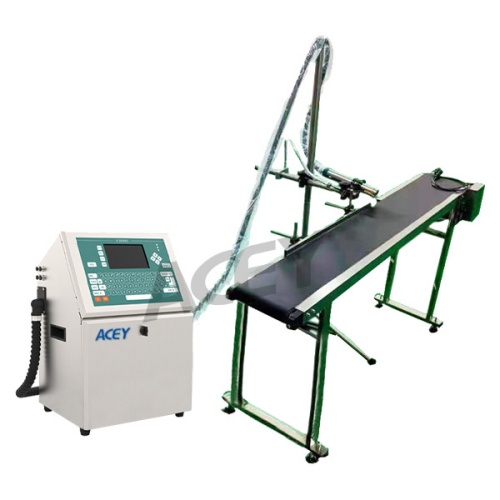
Step 9 — Coding and Traceability
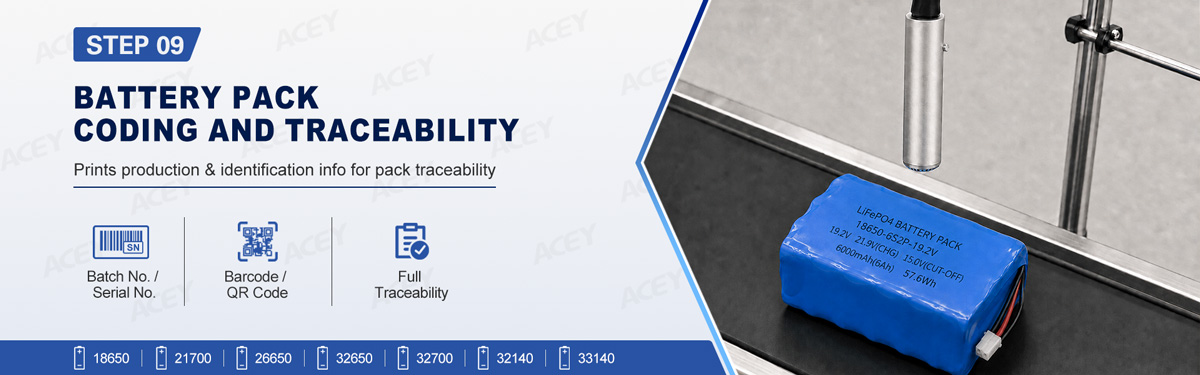
Pack identification is added before shipment or aging.
Printed information includes:
A handheld printer may be enough for small-batch production, while conveyor-based or continuous inkjet printers are more suitable for production lines.
If traceability is required, the printed code can be linked with earlier cell or pack test records.
Recommended Equipment: Battery Pack Coding Machine
Step 10 — Charge/Discharge Aging
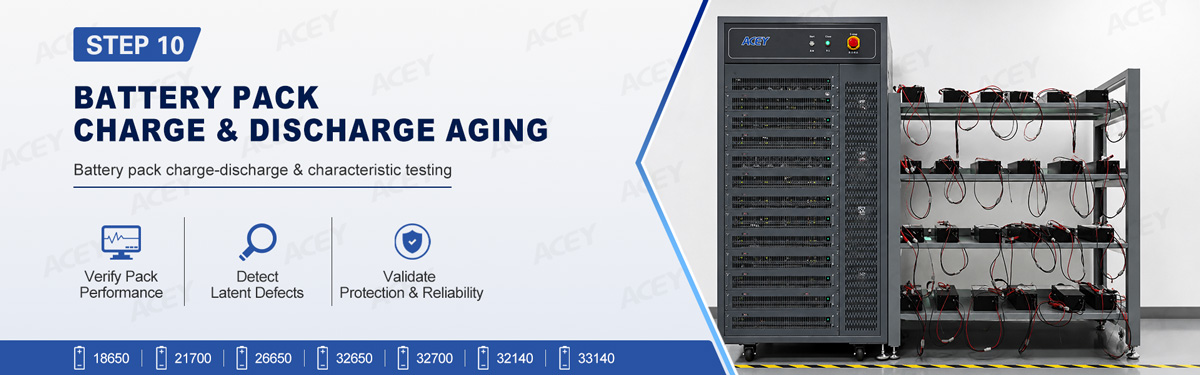
Aging is one of the final electrical verification steps.
The battery pack is charged and discharged according to a programmed test sequence. The system can record:
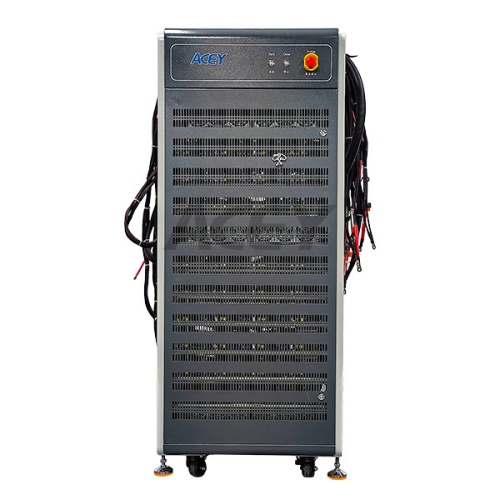
ACEY battery pack charge-discharge and aging systems cover a wide range of battery pack applications.
Available configurations include:
The selected tester must cover the pack’s maximum voltage and required charge/discharge current. Channel quantity is usually selected according to the planned production output and aging time.
For higher-power applications, energy-feedback systems can return part of the discharge energy to the electrical network instead of dissipating it only as heat.
Recommended Equipment: Battery Pack Aging Machine
Semi-Automatic or Fully Automatic?
The higher automation option is not always the better choice.
A semi-automatic production setup is more flexible when the manufacturer produces several battery pack models or changes fixtures frequently.
| Factor | Semi-Automatic Line | Fully Automatic Line |
| Production Volume | Small to medium | Medium to high |
| Investment | Lower | Higher |
| Changeover | More flexible | More dependent on tooling and line design |
| Labor | More manual operations | Lower labor requirement |
| Integration | Standalone or partially connected equipment | Integrated material flow |
| Traceability | Added where required | Easier to integrate across multiple processes |
Many cylindrical battery pack lines use a combination of both.
For example, cell sorting, CCD polarity inspection and automatic spot welding can be automated, while BMS installation, wiring or enclosure assembly remains manual.
This approach often gives better flexibility than trying to automate every process from the beginning.
How to Configure Cylindrical Battery Pack Assembly Equipment
The equipment should be selected from the actual battery pack design rather than only from the cell model.
Two 21700 battery packs may require completely different fixtures, welding machines and test systems if their series-parallel configuration, current requirement and mechanical structure are different.
Before equipment selection, it is useful to confirm the following information.
Cell Information
Battery Pack Design
Welding Information
BMS Information
Production Requirement
Testing Requirement
These details make it much easier to match each machine to the actual process and avoid buying equipment with either insufficient capacity or unnecessary specifications.
ACEY Cylindrical Battery Pack Assembly Solutions
ACEY supplies individual machines, semi-automatic production equipment and fully automatic assembly solutions for cylindrical lithium battery packs.
Equipment can be configured for cells including:
18650 · 21700 · 26650 · 32650 · 32700 · 32140 · 33140
Available processes cover:
For production-line projects, the configuration is developed around the customer’s battery pack, required output and test process rather than from a fixed machine list.
Planning a Cylindrical Battery Pack Project?
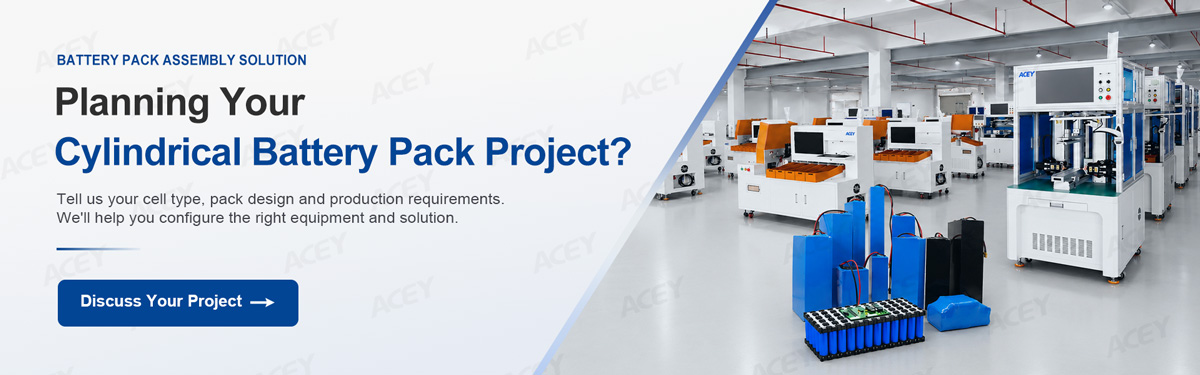
Please provide:
This information allows us to recommend the required machines, tooling, welding configuration and test system for the actual pack.
Discuss Your Battery Pack Assembly Project →
Frequently Asked Questions
*What machines are needed to make a cylindrical battery pack?
A typical production setup may include a cell grading machine, insulation paper sticking machine, OCV/IR sorter, CCD polarity tester, spot welder, BMS tester, battery comprehensive tester, packaging machine, coding machine and battery pack aging tester.
Small-batch production does not necessarily require all processes to be automated.
*What cylindrical cells can be used?
Common formats include 18650, 21700, 26650, 32650, 32700, 32140 and 33140.
Whether one machine can handle several cell sizes depends on its mechanical range and tooling. Fixtures, feeders and holders may need to be changed when switching cell formats.
What is the difference between capacity grading and OCV/IR sorting?
Capacity grading measures cell capacity through charge-discharge testing.
OCV/IR sorting measures open-circuit voltage and internal resistance and groups the cells according to preset ranges.
They are different steps and are often used together before battery pack assembly.
Why check cell polarity before welding?
A reversed cell can create the wrong series-parallel connection once the nickel strip is welded.
CCD inspection checks the complete cell arrangement before welding and identifies cells placed in the wrong direction.
What type of spot welder is used for cylindrical battery packs?
Resistance spot welding is commonly used for nickel and nickel-plated connecting strips.
ACEY provides 5000A, 8000A and 10000A welding power supply, including gantry, single-side automatic and double-side automatic configurations.
機械および溶接パラメータは、セル端子、ストリップ材料、ストリップ厚さ、および溶接パターンに応じて選択する必要があります。
バッターの違いは何ですか包括的なテストと経年劣化テストを実施しますか?
1つの生産ラインで異なる種類のバッテリーパックを製造することは可能ですか?
はい、ただし、変更なしでは済みません。
セル径、パック寸法、または溶接パターンが変更される場合は、ホルダー、治具、フィーダー、または溶接プログラムも変更する必要があります。
半自動ラインは、複数のバッテリーパックモデルを生産する顧客にとって、より高い柔軟性を提供する。
ACEYは生産ラインを推奨する前に、どのような情報を必要としますか?
最も役立つ情報は以下のとおりです。
これらの詳細情報があれば、汎用的なライン構成を使用するのではなく、実際のバッテリーパックに合わせて機器や工具を選択することができる。
Rm703, No.223, Qishan North Road, Huli District, Xiamen, Fujian, China
Eメール : allen@xmacey.com
電話 : +8618950009155
Whatsapp : +8618950009155